Choose a general gynecologist when you need routine reproductive care, pain or bleeding evaluation, contraception, screening, or initial pre-pregnancy advice. Choose a fertility specialist when conception has taken longer than expected, a known fertility risk exists, or testing suggests that advanced reproductive care is needed; some patients should see both in sequence.
Key takeaways
- Start with a gynecologist for symptoms, contraception, screening, menopause, or preconception care.
- See a fertility specialist after 12 months of trying under age 35.
- Seek fertility care after six months of trying from age 35 onward.
- Bring cycle dates, medical records, medications, and your partner’s health history.
Use the problem, not the postcode, to choose your first doctor
Start with a general gynecologist for menstrual changes, pelvic or vaginal symptoms, contraception, cervical screening, menopause concerns, or a first preconception check. Choose a fertility specialist when conception is the problem and you meet the timing rule or have a known risk factor.
| Option | Choose first when | Main role |
|---|---|---|
| General gynecologist | Symptoms or routine reproductive care | Diagnose bleeding, pain, infection, cervical changes, and hormonal concerns |
| Fertility specialist | Infertility thresholds or fertility risks apply | A reproductive endocrinology and infertility physician evaluates conception barriers |
| Both | A general condition may affect conception | The gynecologist manages the condition while the fertility specialist evaluates fertility |
Book fertility care after 12 months of regular unprotected intercourse if you are under 35, after six months at ages 35 to 39, or immediately at age 40 or older.
Do not wait with irregular or absent ovulation, recurrent miscarriage, endometriosis, suspected tubal disease, prior pelvic surgery or chemotherapy, diminished ovarian reserve concerns, or possible sperm problems.
If you search “gynecologist or fertility specialist consultation Airoli,” match the appointment to the problem, not the location. A general gynecologist can assess symptoms and arrange referral when fertility testing or reproductive endocrinology expertise is needed.
What happens in each first consultation
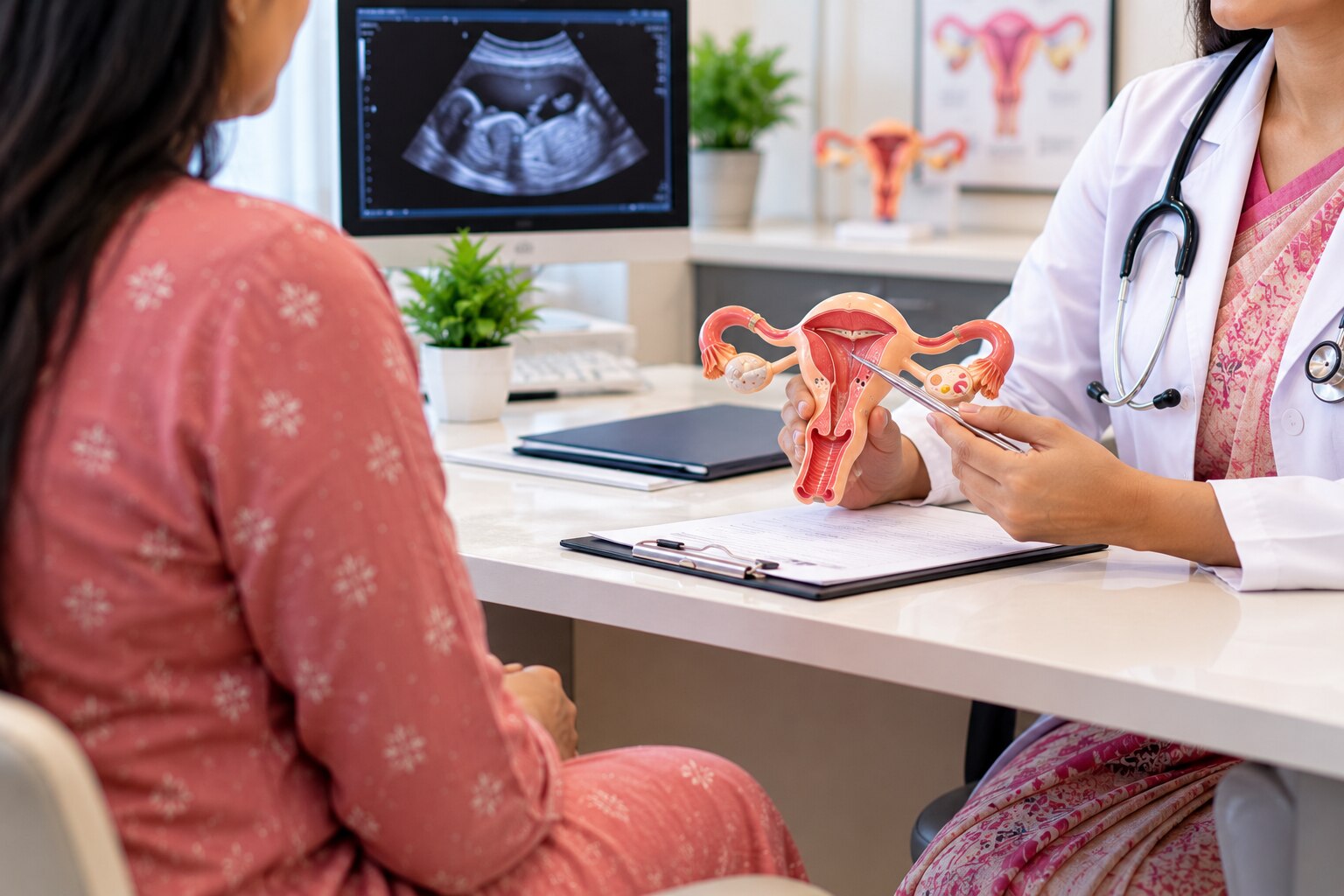
A general gynecologist starts with your reproductive-health history, symptoms, examination, and immediate concerns. The visit may cover cervical screening, vaginal infection, heavy or irregular bleeding, pelvic pain, contraception, and initial blood tests or ultrasound when indicated. The result may be reassurance, medical treatment, follow-up after results, or referral.
A fertility specialist, usually a reproductive endocrinology and infertility physician, reviews both partners rather than assessing only the woman. The discussion includes ovulation patterns, pregnancy history, previous treatment, age-related factors, and risks such as endometriosis or tubal disease.
| Appointment | What the first visit examines | Possible investigations or next steps |
|---|---|---|
| General gynecologist | Symptoms, examination, screening, infection, bleeding, pain, contraception | Blood tests, ultrasound, treatment, follow-up, referral, or selected surgery |
| Fertility specialist | Both partners, ovulation, pregnancy history, prior treatment, fertility risks | Semen analysis, ovulation assessment, AMH, antral-follicle count, pelvic ultrasound, or fallopian-tube evaluation |
AMH and antral-follicle count estimate likely response to ovarian stimulation; they do not prove whether natural conception will occur. Treatment might involve timed intercourse, correcting a medical problem, surgery for a selected condition, intrauterine insemination, or IVF. A fertility consultation does not automatically lead to IVF.
For a gynecologist consultation, Airoli residents can choose a nearby clinician for general reproductive-health concerns; choose fertility care when the history requires specialist evaluation.
When a gynecologist is the better first appointment
A gynecologist is the better first appointment when your main concern involves symptoms, screening, contraception, pregnancy care, or another general reproductive-health issue rather than infertility alone.
- Abnormal Pap test or routine cervical screening
- Vaginal infection, itching, unusual discharge, or odor
- Painful periods, heavy bleeding, or irregular bleeding
- Pelvic pain or a known fibroid
- Contraception, menopause symptoms, or preconception care
- Severe pelvic pain, heavy bleeding, fever, or fainting; seek urgent gynecological care rather than waiting for a fertility appointment
- A positive pregnancy test with pain or bleeding; seek urgent assessment because ectopic pregnancy requires prompt evaluation
A gynecologist can investigate whether pain, bleeding, thyroid disease, infection, fibroids, or another condition is affecting conception. If the findings justify advanced fertility care, they can refer you to a reproductive endocrinology and infertility specialist.
If you cannot tell whether the problem is fertility-related or a general gynecological condition, start with the clinician who can assess the symptoms and arrange the correct referral. Searching for a women doctor near Airoli can improve access, but location does not prove specialist fit; check the doctor’s scope and referral plan.
When a fertility specialist should not be delayed
Do not wait for a routine gynecologist appointment when infertility is prolonged and unexplained, ovulation is irregular or absent, tubes may be blocked, endometriosis is severe, ovarian reserve is a concern, pregnancy losses recur, or your partner may have male-factor infertility.
Use these timing rules:
- Under age 35: seek evaluation after 12 months of regular unprotected intercourse without pregnancy.
- Ages 35 to 39: seek evaluation after six months.
- Age 40 or older: seek evaluation immediately.
Skip the waiting period when a fertility risk factor is already known. A fertility consultation in Navi Mumbai should assess both partners, starting with at least one semen analysis alongside the female partner’s menstrual, ovulation, and reproductive-tract assessment. Infertility is not a female-only diagnosis.
Immediate specialist care brings more tests, expense, repeated visits, and emotional effort. Waiting can cost valuable time when age or reduced ovarian reserve affects the chance of pregnancy. Ask for an evaluation, not fertility medication without a diagnosis; treatment depends on the cause.
A reproductive endocrinology and infertility specialist is especially useful when testing or treatment may involve tubal disease, severe endometriosis, recurrent pregnancy loss, ovulation disorders, or assisted reproduction.
Do not confuse preconception care with an infertility work-up
A preconception consultation prepares you for pregnancy; an infertility work-up investigates why pregnancy has not occurred after trying. A general gynecologist can usually review diabetes, thyroid disease, hypertension, epilepsy, mental-health treatment, prescription and nonprescription medicines, vaccinations, genetic and pregnancy history, lifestyle exposures, and folic acid needs.
1. Take 400 micrograms of folic acid daily beginning at least one month before conception, unless your clinician prescribes another dose. Do not stop epilepsy, psychiatric, blood-pressure, diabetes, or other medicines abruptly; ask whether a medicine needs changing before pregnancy.
2. Escalate to fertility care after 12 months of regular unprotected intercourse when under 35, after six months at ages 35 to 39, or immediately at age 40 or older.
Seek earlier assessment for irregular or absent ovulation, recurrent miscarriage, endometriosis, suspected tubal disease, prior pelvic surgery or chemotherapy, diminished ovarian reserve concerns, or possible sperm problems.
For a preconception consultation Airoli residents can consider Dr. Namrata Kshatriya-Obstetrics & Gynecology for the initial discussion. Ask whether referral to a reproductive endocrinology and infertility specialist is arranged when a risk factor, assisted reproduction, or care beyond routine gynecology is needed.
Related services
Infertility Treatment involves various medical interventions aimed at helping individuals or couples conceive a pregnancy when they have been unsuccessful in achieving... View service → |
Pre - Conception Counselling Here are some key points to consider in pre-conception counseling: 1. View service → |
Prepare for the visit and test the doctor’s referral plan
Bring records that let the clinician see the whole timeline, not just today’s symptoms. Include:
- Menstrual dates and cycle patterns
- Previous pregnancy, delivery, miscarriage, and treatment records
- Scan reports and previous fertility-test results
- Medication and supplement lists
- Vaccination information
- Surgery or operation reports
- Any semen-analysis report
Ask how often the doctor treats the suspected condition, which tests are performed on-site, and whether both partners can be evaluated. Confirm where fallopian-tube testing and semen analysis are arranged.
| Option | Questions to ask | Cost and effort |
|---|---|---|
| General gynecologist | What treatment can you provide, and exactly when will you refer me to reproductive endocrinology or a fertility clinic? | A nearby appointment is often simpler and less expensive for routine care. |
| Fertility specialist | Can you assess both partners and explain which tests are needed before treatment? | More tests and visits may cost more, but early assessment can reduce delays when fertility is time-sensitive. |
Choose based on the problem, the doctor’s scope, and a clear escalation plan—not location alone.
Frequently asked questions
Should I see a gynecologist or fertility specialist first?
Start with a gynecologist for menstrual changes, pelvic or vaginal symptoms, contraception, cervical screening, menopause concerns, or a first preconception check. Choose a fertility specialist when conception is the problem and you meet the timing rule or have a known risk factor.
When should I see a fertility specialist?
Arrange a fertility consultation after 12 months of regular unprotected intercourse if you are under 35, or after six months if you are 35 or older. Do not delay when you have irregular or absent periods, suspected endometriosis, blocked tubes, diminished ovarian reserve, repeated miscarriages, or known sperm concerns.
Is preconception care the same as an infertility work-up?
No. Preconception care checks health, medications, vaccinations, nutrition, and pregnancy risks before trying. An infertility work-up investigates why pregnancy has not occurred and can include ovulation assessment, semen analysis, ovarian reserve testing, and tubal evaluation.
How should I prepare for either consultation?
Bring your menstrual dates, pregnancy and miscarriage history, previous test results, surgical records, medication list, and details of how long you have tried to conceive. Ask how the doctor will investigate the problem and when they will refer you to another specialist.
Related service
Maternity & Gynaecology Maternity and gynecology are two interconnected medical specialties that focus on the health and well-being of women, particularly related to... View service → |
Keywords