Ayurveda gynaecology therapy is not a fixed package: the consultation, tests, medicines and procedures depend on your symptoms, pregnancy status and diagnosis. By the end, you will know what an appointment can involve, which treatments require careful checking, and when urgent conventional medical assessment must come first.
Key takeaways
- Ask how Ayurvedic assessment will be combined with a clinical diagnosis.
- Bring your cycle dates, medication list, reports and pregnancy history.
- Request treatment details, ingredients, procedures, risks and follow-up timing.
- Seek urgent medical care for heavy bleeding, severe pain or pregnancy warning signs.
What Ayurveda gynaecology therapy actually covers
Ayurveda gynaecology therapy means women’s reproductive care planned through Ayurvedic assessment and a clinical diagnosis. In practice, it often falls under Stri Roga, with pregnancy-related care placed under Prasuti Tantra.
Ayurveda gynaecology therapy in Navi Mumbai is not one fixed package: the plan may include diet, daily routines, yoga, oral medicines, external oils or selected procedures.
| Area of care | Main focus | What it does not replace |
|---|---|---|
| Routine gynaecology | Diagnosis of vaginal, menstrual, hormonal and pelvic conditions | It does not automatically include Ayurvedic medicines or therapies |
| Obstetrics | Pregnancy, childbirth and postnatal care | It does not replace antenatal monitoring or emergency maternity care |
| General Ayurveda consultation | Whole-body assessment for varied health concerns | It may not provide a focused reproductive examination |
| Ayurveda gynaecology therapy | Menstrual, reproductive and menopausal concerns using an Ayurvedic plan | It is not equivalent to surgery, fertility testing or emergency treatment |
People commonly seek Ayurveda women health treatment for irregular or painful periods, PCOS-related symptoms, unusual discharge, menopausal discomfort, pelvic symptoms or difficulty conceiving. These symptoms need different assessments; a treatment that eases cramps does not prove that it has treated endometriosis, infection or an ovarian disorder.
Fertility concerns still require appropriate evaluation, which may include ovulation review, semen analysis and assessment of the uterus and fallopian tubes. Prakriti or vikriti assessment, and pulse or tongue assessment when used, should inform—not replace—history-taking, examination and indicated tests.
Which menstrual, reproductive and menopausal concerns may be assessed
Irregular, painful or unusually heavy periods need a cause, not a generic medicine. A practitioner may assess cycle length, bleeding volume, clots, pain, pregnancy possibility, anaemia, thyroid disease, fibroids, endometriosis and medication effects. Rapidly soaking pads, fainting, severe weakness, fever or severe pelvic pain requires urgent medical care.
| Concern | What may be assessed | Why diagnosis matters |
|---|---|---|
| Irregular periods or PCOS-related symptoms | Ovulation, acne, excess facial hair, weight changes, androgen levels and ovarian appearance | PCOS is a diagnosis of exclusion; pregnancy, thyroid disease, high prolactin and other causes must be considered |
| Painful periods | Pain timing, severity, intercourse-related pain and pelvic findings | Endometriosis, adenomyosis, infection or ovarian conditions need different treatment |
| Unusual vaginal discharge | Colour, odour, itching, burning, pelvic pain and pregnancy risk | Thrush, bacterial vaginosis, sexually transmitted infections and cervical problems are not interchangeable |
| Menopausal symptoms | Period changes, hot flushes, sleep, mood, vaginal dryness and bleeding after menopause | Thyroid disease, medication effects and postmenopausal bleeding require separate evaluation |
| Fertility concerns | Ovulation, menstrual history, semen analysis, uterus and fallopian tubes | Ayurvedic reproductive care should not delay basic fertility assessment or effective treatment |
A location search such as ayurvedic gynecology airoli describes where care is sought, not a separate specialty. Ask what diagnosis has been made, which tests support it and when referral to a registered gynaecologist or fertility specialist is needed.
What happens during the first consultation
A responsible first consultation establishes the cause of your symptoms before recommending Ayurvedic therapy. An ayurveda gynecologist in Navi Mumbai should take a complete reproductive history rather than rely on pulse reading or symptoms alone.
- The first day of your last several periods, cycle length and regularity
- Bleeding volume, including pad or tampon use, clots and bleeding between periods
- Pain location, severity, timing and effect on daily activities
- Any possibility of pregnancy
- Current contraception and plans for pregnancy
- Previous pregnancies, births, miscarriages, abortions and fertility treatment
- All medicines, supplements and contraceptive hormones
- Medical history, including thyroid disease, PCOS, anaemia, diabetes, surgery and allergies
The clinician should check vital signs and perform an abdominal examination. A pelvic examination belongs in the appointment when symptoms and consent support it; vaginal discharge, pelvic pain or abnormal bleeding can require this examination. Ask whether the clinician will review your blood tests, urine or pregnancy results, ultrasound scans and other imaging reports.
Additional tests depend on the findings. They can include a pregnancy test, complete blood count for anaemia, thyroid testing, hormone tests or infection testing, while ultrasound can assess fibroids, ovarian changes or other structural causes.
A diagnosis based only on pulse or tongue assessment can miss pregnancy, infection, endometriosis, fibroids or significant blood loss, so ask what each test is intended to rule out.
Which Ayurvedic treatments and procedures might be proposed
A plan should follow the diagnosis, not only a prakriti (constitution) or vikriti (imbalance) label. A practitioner may use history, pulse or tongue assessment when that method is part of their practice, then combine it with examination and reports.
Diet, daily routines, yoga, oral medicines, oils and external therapies may support an ayurveda women health treatment. For fertility, ayurvedic reproductive care must not delay ovulation assessment, semen analysis, or evaluation of the uterus and fallopian tubes.
| Treatment | What it involves | Safety boundary |
|---|---|---|
| Yoni pichu | Cotton holding medicated oil or another preparation locally | Confirm the product, duration, indication and sterile technique; it does not treat every infection or cervical disease |
| Yoni prakshalana | Local washing or irrigation | Unsterile fluids can irritate tissue or introduce infection; it is not a substitute for discharge testing |
| Uttara basti | Introducing a preparation through the genital or urinary tract, depending on technique | Require pregnancy testing, infection screening, informed consent and a trained clinician; it is not routine cleansing |
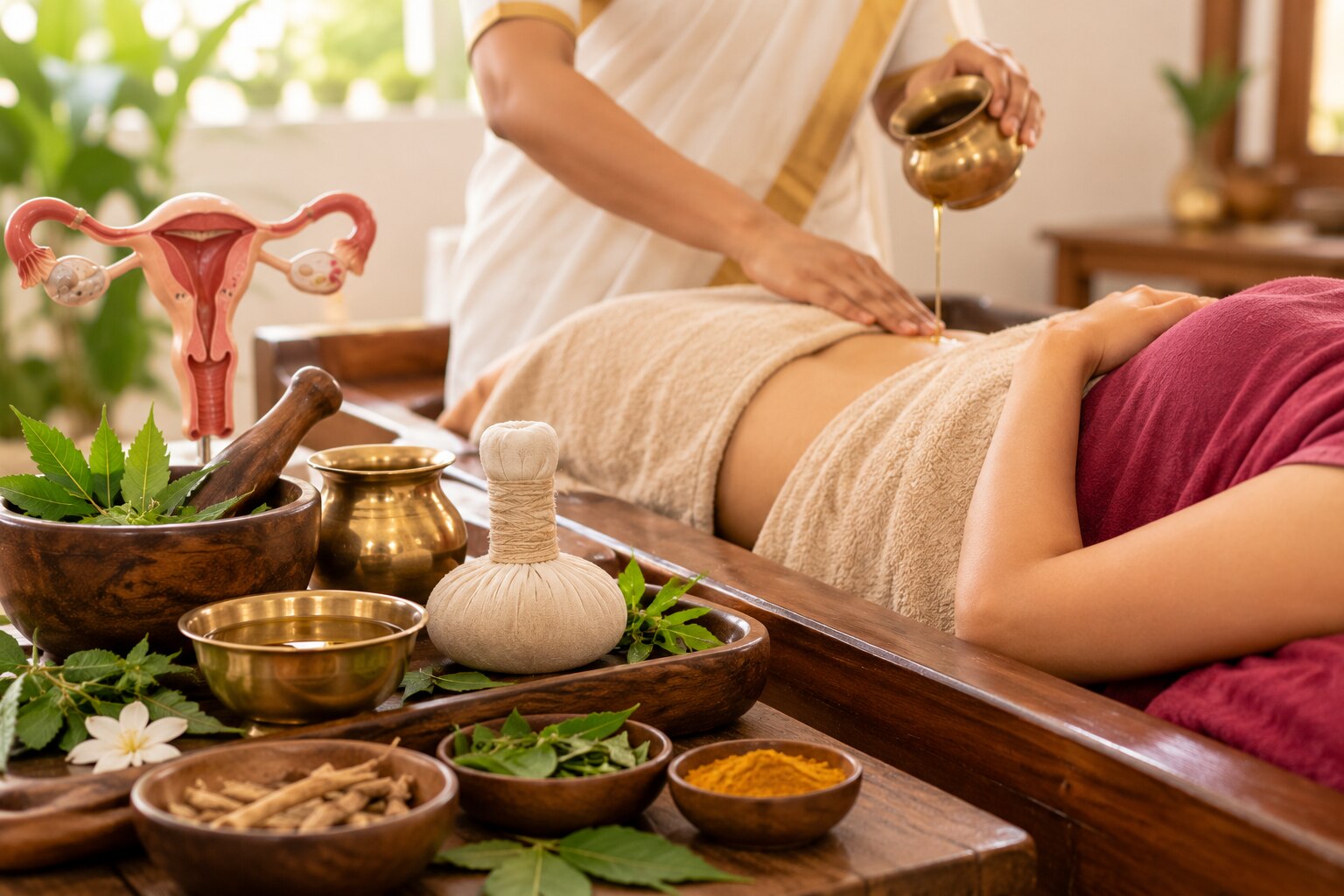
| Abhyanga and steam | Oil massage and heat-based external therapy | Avoid excessive heat and check suitability during pregnancy, fever or circulatory problems |
- What diagnosis supports it, and what alternatives exist?
- What exactly will be inserted or applied, and how will sterility be maintained?
- What symptoms require stopping and seeking medical care?
- Which prescribed medicines, tests or obstetric monitoring must continue?
How to choose a safe service and recognise when referral is urgent
Choose an ayurveda gynecologist in Navi Mumbai by checking credentials and safety arrangements, not by relying on the words “natural” or “Ayurvedic.” Ask for a recognised Ayurveda qualification, current registration number, proposed diagnosis, treatment form, required tests, medicine list, known risks, and a clear referral plan.
- Confirm whether each treatment is oral, topical, vaginal or invasive, and ask how instruments are sterilised.
- Disclose pregnancy or breastfeeding, liver or kidney disease, allergies, prescription medicines and planned surgery. Herbal products can interact with medicines, and contaminated products have contained lead, mercury or arsenic.
- Ask what happens if bleeding worsens, pregnancy occurs, or emergency surgery becomes necessary.
Ayurvedic gynecology Airoli is a location-based search, not a separate legally defined specialty. Compare the practitioner’s scope and referral access with these situations:
| Situation | Appropriate next step | Why |
|---|---|---|
| Stable period, PCOS or menopausal concern | Planned assessment | Diagnosis and tests can guide treatment |
| Pregnancy, breastfeeding, liver or kidney disease | Doctor review before any preparation | Dosing and safety require individual checking |
| Heavy bleeding, severe pain, fever, fainting or marked weakness | Urgent medical assessment | Delaying care can worsen anaemia, infection or internal bleeding |
| Possible ectopic pregnancy or miscarriage | Emergency obstetric evaluation | Ayurveda therapy cannot replace ultrasound, blood tests or surgery |
Ayurveda gynaecology therapy in Navi Mumbai is not a substitute for emergency or surgical care. If you need coordinated diagnosis, maternity care or referral, Dr. Namrata Kshatriya-Obstetrics & Gynecology can help determine whether an Ayurveda consultation is suitable or whether conventional gynaecological assessment comes first.
Related service
Ayurveda Dr. Namrata Kshatriya offers specialized Ayurveda Gynecology Therapies designed to support women’s reproductive health, hormonal balance, and overall... View service → |
Frequently asked questions
What does Ayurveda gynaecology therapy cover?
It covers women’s reproductive care assessed through Ayurveda, with clinical diagnosis and pregnancy-related care placed under Prasuti Tantra.
Which concerns can an Ayurvedic gynaecology consultation assess?
The assessment may address menstrual concerns, reproductive health questions, fertility-related issues and menopausal symptoms, depending on your history and examination.
What happens during the first consultation?
You discuss your symptoms, cycle pattern, reproductive and pregnancy history, medicines and previous reports. The practitioner then decides whether further examination, testing, treatment or referral is appropriate.
When should you seek urgent referral instead of routine Ayurvedic care?
Seek urgent medical care for severe pelvic pain, very heavy bleeding, fainting, fever with pelvic symptoms, or warning signs during pregnancy.
Keywords